If your pelvic floor feels tight or grippy – like you can’t quite “let go” – this post is for you.
Tight muscles aren’t always strong muscles. Imagine clenching your fist all day: it would soon feel stiff, sore, maybe even spasm, and ultimately weaken. The pelvic floor works the same way when it’s held too tightly.
To get a sense of how the pelvic floor works, try this: gently contract the muscles you’d use to stop passing wind, then fully let them go. Notice the difference between “on” and “off.” That full release is the resting state we want the muscles to return to.
This is what we call an overactive pelvic floor: muscles that stay in a frequent state of contraction, never fully releasing. Instead of moving smoothly up and down like an elevator, the pelvic floor gets stuck between floors, unable to return to its resting level.
Over time, this can lead to pelvic pain and/or heaviness, problems with bladder and bowel function, and pain during sex.
Sometimes the pelvic floor stays “on” not because it’s weak, but because it’s protecting the body. Stress, posture, breathing patterns, or past injury can all train the muscles to remain overactive.
3 gentle Ways to Help Your Pelvic Floor Relax
Use Your Breath
Belly breathing helps encourage your pelvic floor to relax through links between the diaphragm, pelvic floor and nervous system.
- Find a position where your body feels supported: lying on your back or sitting with both feet grounded.
- Rest one hand on your chest and the other on your lower belly. Draw air in through your nose at a slow, steady pace. Let your ribs widen like bucket handles and your tummy rise into your hand. Picture the pelvic floor softening downward, like a hammock gently stretching.
- As the breath leaves you without effort, feel your lower tummy ease away from your hand. This slow breathing also calms your nervous system, sending the message that your body is safe enough to let go.
- Practice 5 to 10 cycles, a couple of times each day.
Shapes to Stretch and Soften
Think of these as “rest poses for the pelvic floor”, not workouts. Maintain each shape for 1–2 minutes, using slow breathing to invite ease rather than pulling or forcing.
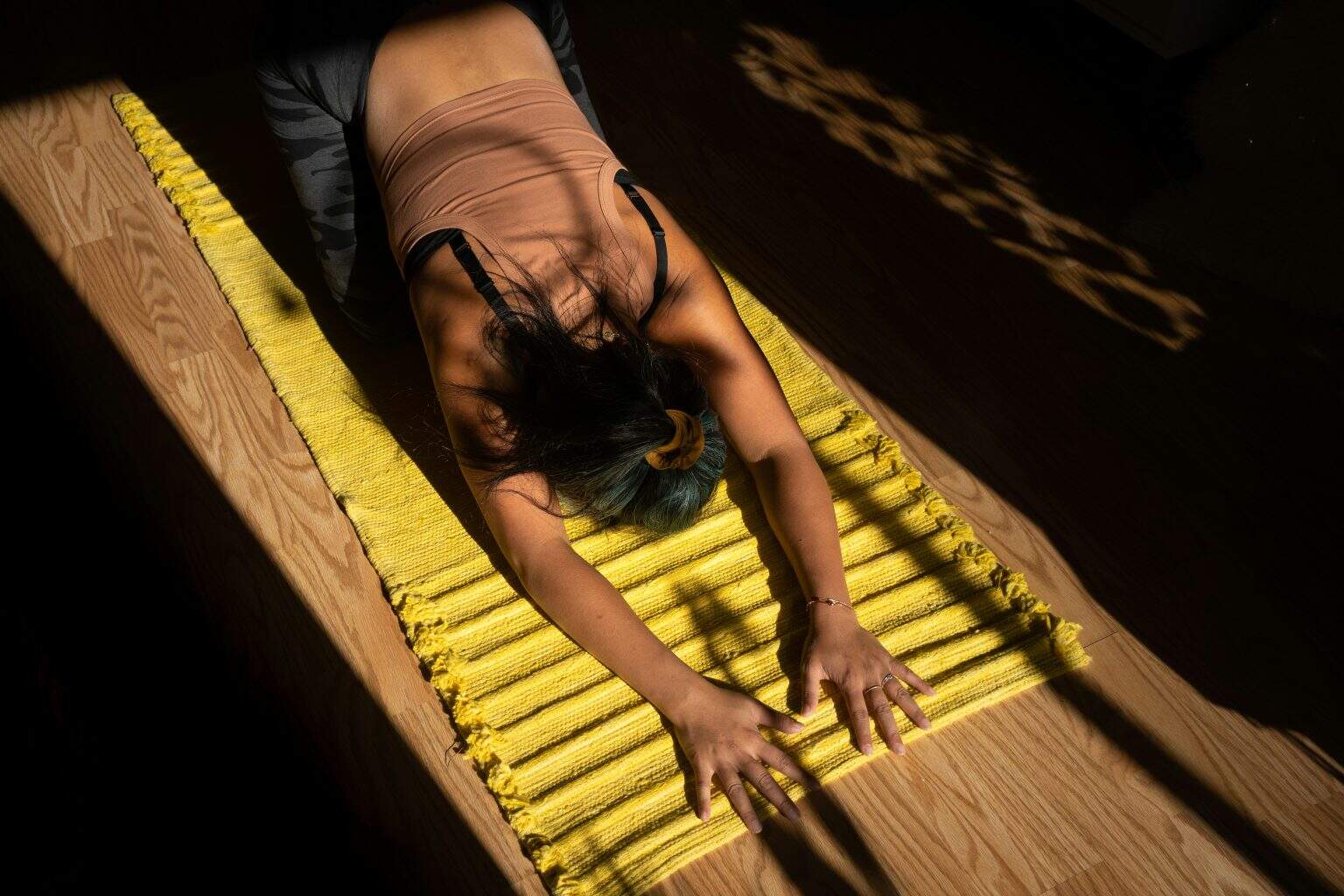
- Child’s pose – Knees wide, hips back, arms reaching forward.
- Happy baby – On your back, knees lifted, hands holding back of thighs or feet.
- Supported squat – Sit onto a stack of cushions in a squat, let the pelvis hang heavy
Notice and Reset
- When your body is in “fight or flight” mode, muscles brace for protection. Stress or long hours at a desk can add to that tension, which is why quick check-ins matter.
- Ask yourself: Is my pelvis tucked under? Am I clenching my stomach or buttocks? Are my legs crossed tightly?
- If so, pause. Uncross your legs, soften your belly, roll your pelvis to neutral, and take one slow breath.
These small resets aren’t just posture checks, they signal to your nervous system that you’re safe, helping the pelvic floor release. Over time, those cues retrain your body to relax more easily.
Relaxing your pelvic floor isn’t about forcing the muscles to “switch off.” It’s about teaching your body new patterns through breath and gentle movement. With consistent practice, these small shifts retrain your body to release more easily when it needs to.
For personalised guidance on these techniques and other ways to relax the pelvic floor, our pelvic physiotherapists are here to help.
Written by Samah Elomari